
Adequate documentation is necessary to ensure accurate financial reporting and ensure compliance with regulatory requirements. This account serves as a temporary placeholder to compile and summarize all revenues and expenses at the end of an accounting period. After compiling the totals from revenue and expense accounts, the net income or loss is transferred to retained earnings, and the income summary account is closed.
- When you close a temporary account at the end of a period, you start with a zero balance in the next period.
- For example, if the total revenue recorded was $20,000, then a debit entry of the same amount should be written in the revenue account.
- You forget to close the temporary account at the end of 2021, so the balance of $50,000 carries over into 2022.
- Accurate recording is essential for businesses to make informed financial decisions and maintain credibility.
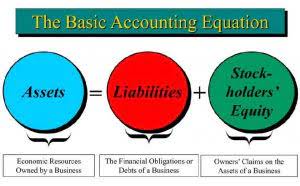
- Basically, to close a temporary account is to close all accounts under the category.
- To help you further understand each type of account, review the recap of temporary and permanent accounts below.
Streamlined reconciliation
For the past 52 years, Harold Averkamp (CPA, MBA) hasworked as an accounting supervisor, manager, consultant, university instructor, and innovator in teaching accounting online. For the past 52 years, Harold Averkamp (CPA, MBA) has worked as an accounting supervisor, manager, consultant, university instructor, and innovator in teaching accounting online. Boost your confidence and master accounting skills effortlessly with CFI’s expert-led courses! https://www.bookstime.com/ Choose CFI for unparalleled industry expertise and hands-on learning that prepares you for real-world success.
Treasury Management
Access and download collection of free Templates to help power your productivity and performance.
What are Permanent Accounts?
Automated systems use predefined rules and algorithms to handle data, reducing discrepancies and improving the consistency of financial records. Lack of communication between different teams involved in financial management can lead to challenges in managing temporary and permanent accounts. It’s essential to establish clear lines of communication to ensure everyone is aligned. Effective communication helps businesses to avoid accounting errors and enables effective decision-making.

Journal Entries in Accounting (Explained) Practical Examples
For both temporary and permanent which of the following is a temporary account? accounts, this means that any discrepancies or anomalies can be identified and addressed quickly, reducing the risk of inaccurate financial reporting. One of the most significant challenges businesses face when managing temporary and permanent accounts is ensuring they are accurately recorded. Any errors in recording can lead to inaccurate financial statements, which can have severe consequences. Accurate recording is essential for businesses to make informed financial decisions and maintain credibility.
- To avoid the above scenario, you must reset your temporary account balances at the beginning of the year to zero and transfer any remaining balances to a permanent account.
- Being able to show activities for different financial periods is crucial too.
- Revenue refers to the total amount of money earned by a company, and the account needs to be closed out at the end of the accounting year.
- Effective communication helps businesses to avoid accounting errors and enables effective decision-making.
- We have helped accounting teams from around the globe with month-end closing, reconciliations, journal entry management, intercompany accounting, and financial reporting.
This means that recording a transaction in the period in which they occurred is paramount. Being able to show activities for different financial periods is crucial too. From 1 January 2023 to 31 March 2023, CCC recorded sales of $40,000 in the revenue account, $20,000 in the cost of goods sold account and $5,000 in the administrative expense account. For the year ended 31 December 2022, CCC recorded sales of $120,000 in the revenue account, $60,000 in the cost of goods sold account and $20,000 in the administrative expense account.
In corporations, dividend accounts record the profits distributed to shareholders. At the end of the period, the balances in these accounts are closed and transferred to retained earnings or capital. You must close temporary accounts to prevent mixing up balances between accounting periods. When you close a temporary account at the end of a period, you start with a zero balance in the next period. And, you transfer any remaining funds to the appropriate permanent account. Automation minimizes human error by ensuring that transactions are recorded accurately in both temporary and permanent accounts.
What are Temporary Accounts in Accounting? (The Definition)

The other side of the entry (debit) goes to the income summary account. Unlike temporary accounts, you do not need to worry about closing out permanent accounts at the end of the period. Instead, your permanent accounts will track funds for multiple fiscal periods from year to year.
Reconciliation
A temporary account is a general ledger account that begins each accounting year with a zero balance. Then at the end of the year its account balance is removed by transferring the amount to another account. Let’s say you have a cash account balance of $30,000 at the end of 2021. Because it’s a permanent account, you must carry over your cash account balance of $30,000 to 2022.
- All of the income statement accounts are classified as temporary accounts.
- Insufficient documentation is another challenge businesses face when managing temporary and permanent accounts.
- To close the revenue account, the accountant creates a debit entry for the entire revenue balance.
- It streamlines the closing process for temporary accounts, accelerates financial reporting with real-time updates, and reduces manual errors through automated data entry and reconciliation.
- The income summary is a temporary account of the company where the revenues and expenses were transferred to.
- HighRadius’ Record to Report Solution significantly enhances the management of both temporary and permanent accounts by automating key processes and ensuring real-time accuracy.
All of the income statement accounts are classified as temporary accounts. A few other accounts such as the owner’s drawing account and the income summary account are also temporary accounts. In this blog, we’ll explore the key differences between temporary and permanent accounts and understand the key role they play in ensuring accurate financial reporting. A temporary account that is not an income statement account is the proprietor’s drawing account. The balance in the drawing account is Accounting Periods and Methods transferred directly to the owner’s capital account and will not be reported on the income statement or in an income summary account.
